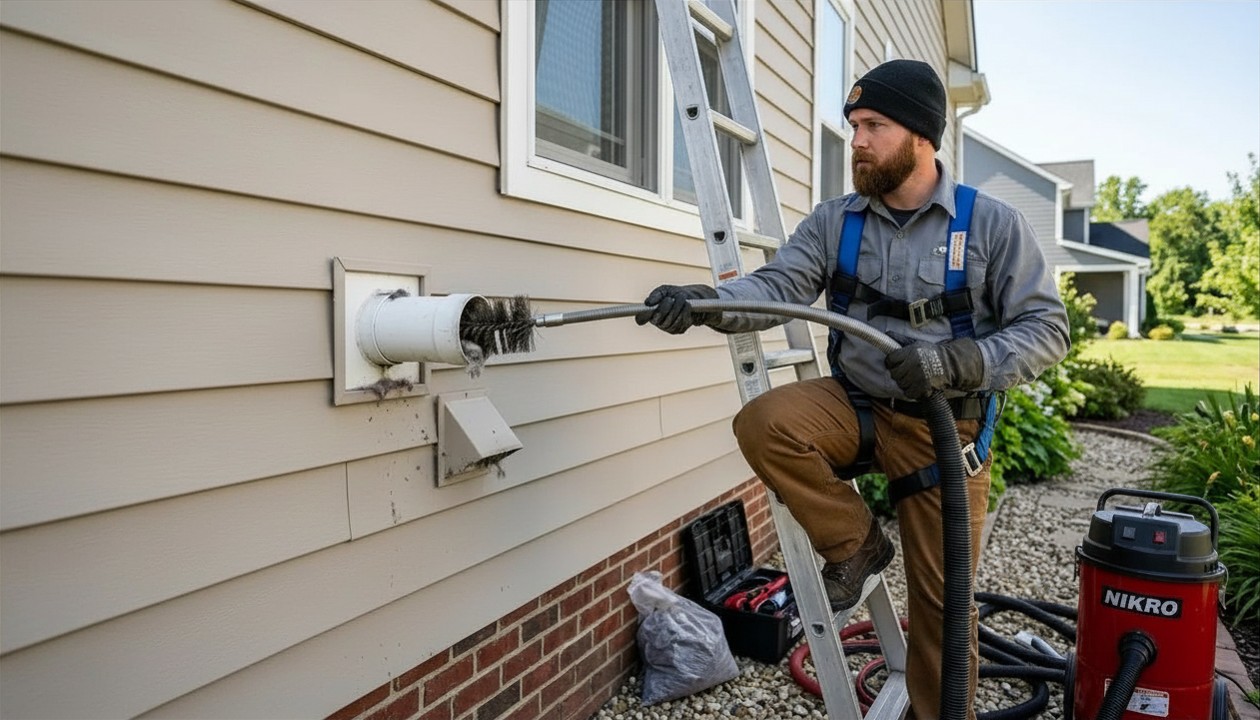
Doctor Vent provides commercial dryer vent cleaning across Chattanooga — apartment communities, HOAs, condominiums and multifamily properties of 50 units and more. Local crews, NFPA 211 compliant service, before/after photos of every unit, and vendor credentialing through NetVendor, RealPage and VendorCafe.
The Chattanooga Market
Chattanooga’s Southside and Northshore mid-rise growth sits alongside long-established garden communities in East Brainerd and Hixson. Tennessee Valley humidity compacts lint quickly, and the older stock frequently has never had documented vent maintenance.
Why Dryer Vents Matter Here
US fire departments respond to an estimated 15,970 home fires involving clothes dryers and washing machines every year (NFPA). Failure to clean is the leading cause at 34%, and lint is the first item ignited in 27% of dryer fires. NFPA 211 requires dryer exhaust systems to be inspected annually and cleaned as necessary — a requirement enforced through fire marshal inspections, insurance carrier requirements and acquisition due diligence.
Submarkets We Cover
Southside, Northshore, Downtown, East Brainerd, Hixson, Red Bank, Ooltewah — and everywhere between. If your property is in the Chattanooga area, we service it.
What Our Chattanooga Service Includes
- Full-length cleaning of every vent — dryer connection to exterior termination
- Wall, roof and underground terminations cleared and inspected
- Before and after photos of every single unit
- Airflow verification and deficiency reporting
- Resident notices and entry coordination with your office
- Completion certificate for your compliance file
Pricing and Quoting
Chattanooga properties are quoted per unit based on termination type and access — typically $18–35 per unit for community-wide programmes. Portfolio pricing is available for management companies with multiple properties. Satellite quoting means a firm quote within 24 hours, no site walk needed.
Neighborhoods and Submarkets We Serve in Chattanooga
Our crews work across the entire Chattanooga metro. If your property is here, we service it:
- Downtown
- Southside
- Northshore
- St Elmo
- Highland Park
- East Brainerd
- Hixson
- Red Bank
- Signal Mountain
- Lookout Mountain
- Ooltewah
- Collegedale
- East Ridge
- Soddy-Daisy
Serving the Whole Chattanooga Metro
Local Conditions That Affect Chattanooga Dryer Vents
Tennessee Valley humidity compacts lint quickly, and Chattanooga’s long-established garden inventory frequently has no documented vent maintenance history — the properties predate current ownership by several trades.
Frequently Asked Questions
How much does commercial dryer vent cleaning cost in Chattanooga?
Chattanooga properties are quoted per unit — typically $18–30 per unit. A 240-unit community budgets roughly $4,320–$7,200. Ground-level wall terminations sit at the bottom of that band; rooftop vertical risers at the top. Portfolio rates apply across multiple Chattanooga properties.
How often should dryer vents be cleaned in Chattanooga?
NFPA 211 requires annual inspection; cleaning follows the findings. Most Chattanooga properties run a 12–24 months cleaning cycle. Tennessee Valley humidity compacts lint quickly, and Chattanooga’s long-established garden inventory frequently has no documented vent maintenance history at all — the properties predate the current ownership by several trades.
Is dryer vent cleaning legally required in Tennessee?
For multifamily, effectively yes. Tennessee enforces the IFC; Nashville and Memphis fire marshals run active multifamily inspection programmes. NFPA 211 requires dryer exhaust to be inspected at least annually and cleaned as necessary, and that requirement reaches your property through the adopted fire code. Chattanooga fire department inspects multifamily occupancies, and lint-blocked exterior terminations are a visible, citable condition.
Which Chattanooga neighborhoods do you cover?
All of them. Our crews work Downtown, Southside, Northshore, St Elmo, Highland Park, East Brainerd, Hixson, Red Bank and every other submarket across the metro — see the full list above. If your property is in the Chattanooga area, we service it.
What size properties do you work with?
Apartment communities, HOAs, condominiums and commercial properties of 50 units and above. We do not service single-family homes. Chattanooga’s stock is dominated by Southside and Northshore mid-rise plus East Brainerd and Hixson garden communities, and we carry equipment for every configuration here — including rooftop access and long vertical riser systems most vent vendors cannot reach.
Do I need to be on site during the work?
No. We quote from satellite and street imagery, so no site walk is needed. During the project we coordinate with your site team, issue daily progress updates, and deliver the full photo report within 48 hours of completion.
Are you an approved vendor for Chattanooga management companies?
We maintain compliant profiles in NetVendor, RealPage Vendor Credentialing and VendorCafe. Property assignment typically takes 2–3 business days rather than weeks. Certificates of insurance are issued with your exact additional-insured wording, usually same day.
What documentation do I receive?
Before and after photographs of every single unit, exterior termination photos, an airflow verification summary, a deficiency log with unit locations, an access exception list, and a dated completion certificate referencing NFPA 211 — the file your regional manager, your insurance carrier and the Tennessee fire marshal each need.
Nearby Markets We Also Serve
Why Property Managers Choose Doctor Vent
Doctor Vent LLC was founded in 2011 and has cleaned 18,000+ dryer vents across 3,200+ properties. We are a NADCA member, our supervisors hold Air Systems Cleaning Specialist (ASCS) certification and OSHA 30, and we are an approved vendor in NetVendor, RealPage Vendor Credentialing and VendorCafe. We carry $2M general liability and a $5M umbrella through The Hartford, and issue certificates of insurance to your exact wording, usually the same day.
What a Project Actually Looks Like
A 312-unit garden-style community in Orlando — 18 buildings, nine days, fully occupied. The deficiency log recorded heavy lint accumulation, blocked rooftop exhaust terminations, dust build-up inside supply trunks, multiple disconnected dryer transitions, and poor airflow in upper-floor units.
Airflow improved by approximately 22%. The disconnected transitions mattered most: those units were discharging hot, lint-laden air into the building structure, and the residents had reported nothing, because their dryers appeared to work.