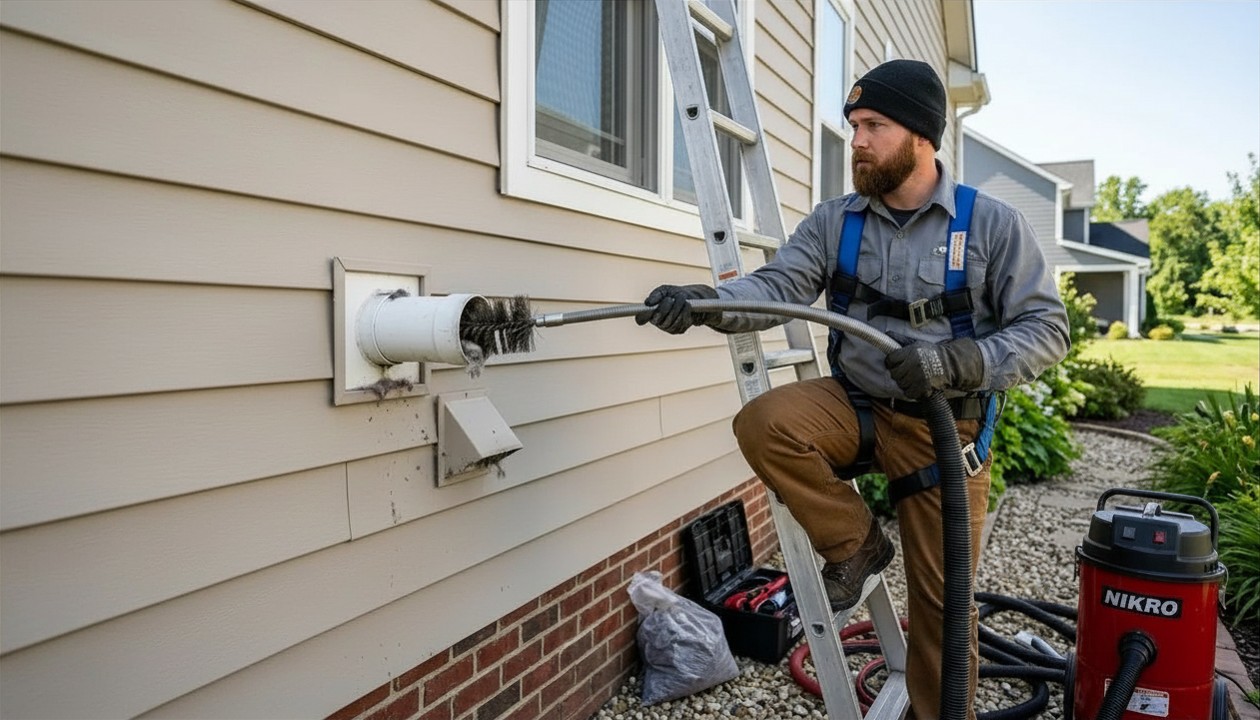
Doctor Vent provides association-wide dryer vent cleaning for HOAs, condominium associations and townhome communities across Jacksonville. We work with community association managers, board members and management companies to deliver the documentation, pricing consistency and communication that association governance requires.
Jacksonville Associations
Jacksonville associations spread across a vast geography from the beaches to St Johns County. Townhome HOAs dominate, with Southbank condominium towers adding vertical stock. Florida’s NFPA-based fire code applies NFPA 211’s annual inspection requirement directly.
Why Associations Schedule Community-Wide Cleaning
In most condominium and townhome governing documents, the dryer duct passes through common elements — wall cavities, chases and roof structures the association is responsible for. A lint fire that starts in one owner’s duct becomes an association problem the moment it reaches shared structure.
A community-wide programme also solves the consistency problem. When cleaning is left to individual owners, some do it, most do not, and the association’s fire risk is set by the least diligent unit. One scheduled programme brings every door to the same standard on the same date, with documentation to prove it.
Board-Ready Proposals and Reporting
Our proposals are written for board packets: fixed per-door pricing, clear scope, insurance certificates and references included, ready to table at your next meeting. After completion your board receives a report suitable for the minutes — doors completed, deficiencies found with photographs, and the compliance certificate for the association’s official records.
Owner Communication Handled
We provide notice templates for your management company or board to distribute, offer scheduling windows accommodating owner-occupants and tenants alike, and run a documented re-attempt process for units we cannot access on the first pass. Access rates on our association programmes typically exceed 90% on the first scheduling round.
Per-Door Pricing in Jacksonville
Association work is quoted per door — typically $18–35 depending on building type. Townhome communities with ground-level wall terminations sit at the low end; high-rise condominiums with rooftop risers sit at the top, because those systems require roof access, vertical-run equipment and more time per unit.
Operating Expense, Not Reserves
Dryer vent cleaning is recurring maintenance, so most associations fund it from the annual R&M line rather than reserves. Where inspection reveals duct damage or non-compliant materials requiring replacement, that remediation may qualify differently — ask your reserve analyst.
See also: Commercial service in Jacksonville | Condominium programmes | HOA cost guide
Neighborhoods and Submarkets We Serve in Jacksonville
Our crews work across the entire Jacksonville metro. If your property is here, we service it:
- Downtown
- Southbank
- Riverside
- Avondale
- San Marco
- Springfield
- Murray Hill
- Southside
- Baymeadows
- Mandarin
- Julington Creek
- Town Center
- Tinseltown
- Arlington
- Fort Caroline
- Jacksonville Beach
- Neptune Beach
- Atlantic Beach
- Ponte Vedra
- Nocatee
- St Johns
- Fleming Island
- Orange Park
- Middleburg
- Oakleaf
- Argyle
- Westside
- Northside
- Yulee
- Fernandina Beach
Serving the Whole Jacksonville Metro
Local Conditions That Affect Jacksonville Dryer Vents
Atlantic hurricane season and nor’easters drive debris into terminations across Jacksonville’s coastal communities, and salt air corrodes damper components at beach properties. NAS Jacksonville and Mayport privatised housing carry contractual maintenance documentation obligations.
Frequently Asked Questions
How much does HOA dryer vent cleaning cost per door in Jacksonville?
Association work is quoted per door — typically $18–32 in Jacksonville. Townhome communities with ground-level wall terminations sit at the low end; high-rise condominiums with rooftop risers at the top, because those require roof access, vertical-run equipment and more time per unit. A 150-door community budgets roughly $2,700–$4,800.
Is the duct the association’s responsibility or the owner’s?
Read your declaration and CC&Rs, but in most condominium and townhome documents the duct run passing through walls, chases and the roof is a common element maintained by the association. The dryer itself and the flexible transition hose behind it are owner property. Where the duct is a common element, the association’s duty to maintain it is not optional.
Why not leave cleaning to individual owners?
Because it does not work. When it is left to owners, a minority arrange it and most do not — so the building’s fire risk is set by the least diligent unit, and the association ends up with no record. In shared-riser buildings, one blocked duct restricts an entire vertical stack. A community-wide programme brings every door to the same standard on the same date, with documentation for the association’s official records, and costs less per door than owners buying individually.
How often should Jacksonville associations schedule cleaning?
NFPA 211 requires annual inspection, with cleaning as findings dictate. Most Jacksonville associations run a 12–18 months cleaning cycle. Jacksonville’s military presence at NAS Jacksonville and Mayport includes privatised housing communities where preventive maintenance documentation is a contractual obligation under project agreements.
Does this come out of operating budget or reserves?
Operating, in almost every case. Dryer vent cleaning is recurring maintenance rather than component replacement, so most reserve studies exclude it and boards fund it from the annual R&M line. Where inspection reveals duct damage or non-compliant materials requiring replacement, that remediation may be treated differently — ask your reserve analyst.
What should the board look for when comparing proposals?
Ask every bidder four questions: Do you clean the entire duct run or only the accessible ends? Do you photograph every door before and after? Do you verify airflow at every unit? What is your documented process for doors you cannot access? A proposal answering all four at a higher price is better value than one that does not — the cheap proposal cleans the last few feet, photographs nothing, and leaves the association without records.
What does the board receive for its records?
Per-door before and after photographs, a deficiency log with unit locations, an airflow verification summary, and a dated completion certificate referencing NFPA 211 — suitable for the minutes, the association’s official records, the insurance file and the resale disclosure package. Jacksonville fire and rescue department inspects multifamily occupancies in Florida against that standard.
How do you handle owner communication?
We provide notice templates for your management company or board, offer scheduling windows that accommodate owner-occupants and tenants alike, and run a documented re-attempt process for doors we cannot access on the first pass. Access on our association programmes typically exceeds 90% on the first scheduling round.
Why Property Managers Choose Doctor Vent
Doctor Vent LLC was founded in 2011 and has cleaned 18,000+ dryer vents across 3,200+ properties. We are a NADCA member, our supervisors hold Air Systems Cleaning Specialist (ASCS) certification and OSHA 30, and we are an approved vendor in NetVendor, RealPage Vendor Credentialing and VendorCafe. We carry $2M general liability and a $5M umbrella through The Hartford, and issue certificates of insurance to your exact wording, usually the same day.
What a Project Actually Looks Like
A 428-unit luxury multifamily community in Tampa — 24 buildings, eleven days, residents in place throughout. The deficiency log recorded construction debris still sitting inside ducts, dust contamination following renovations, blocked bathroom exhausts and heavy lint accumulation in the dryer runs.
Airflow improved across every tested unit. HVAC maintenance requests fell. Residents reported better indoor air quality. The construction debris is the detail worth noting: this was not an old building, and nobody had ever looked inside the ducts since handover.